

2026/03/13
February 6, 2026 NPI Open Symposium: "The World in 2026─The Future of International Politics in an Era Without Coordinate Axes, Compasses, or Nautical Charts"

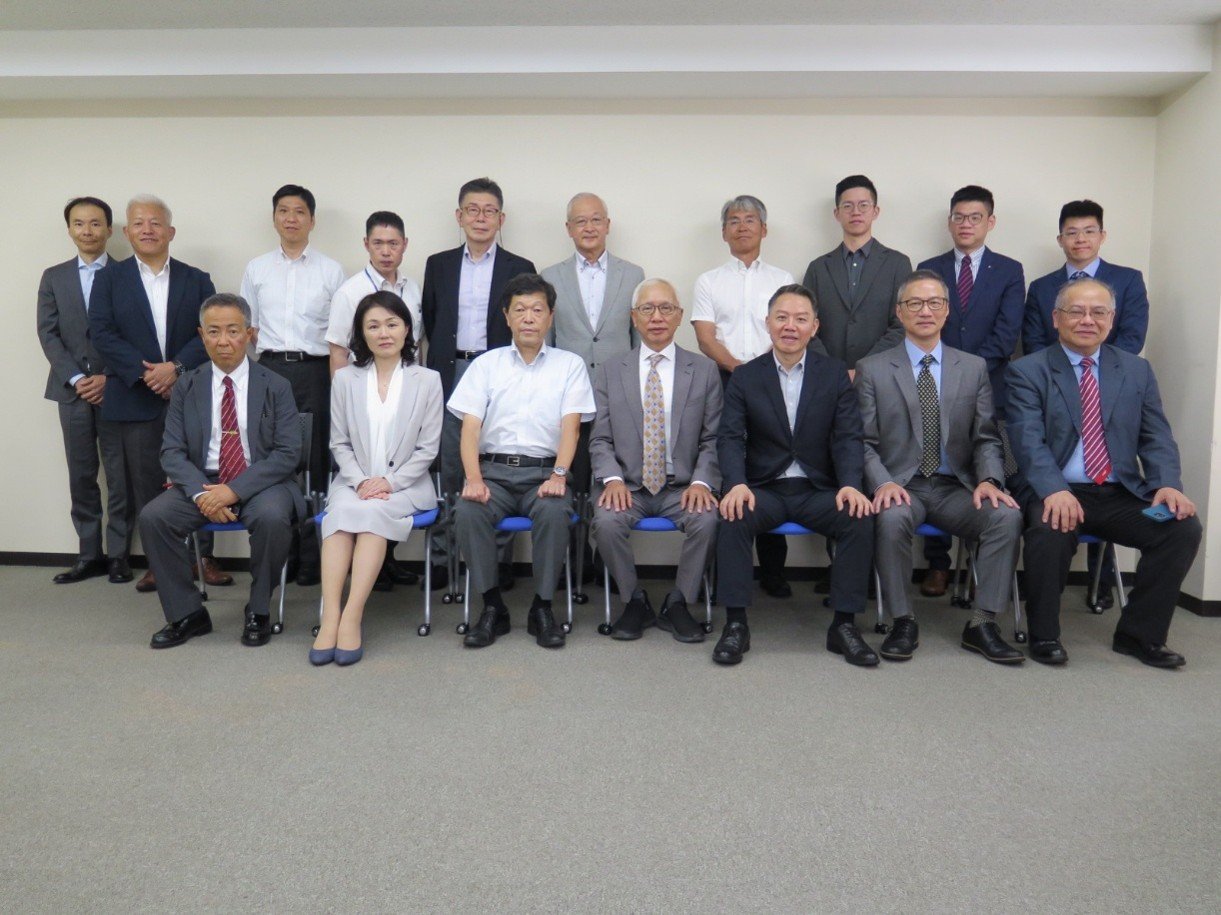
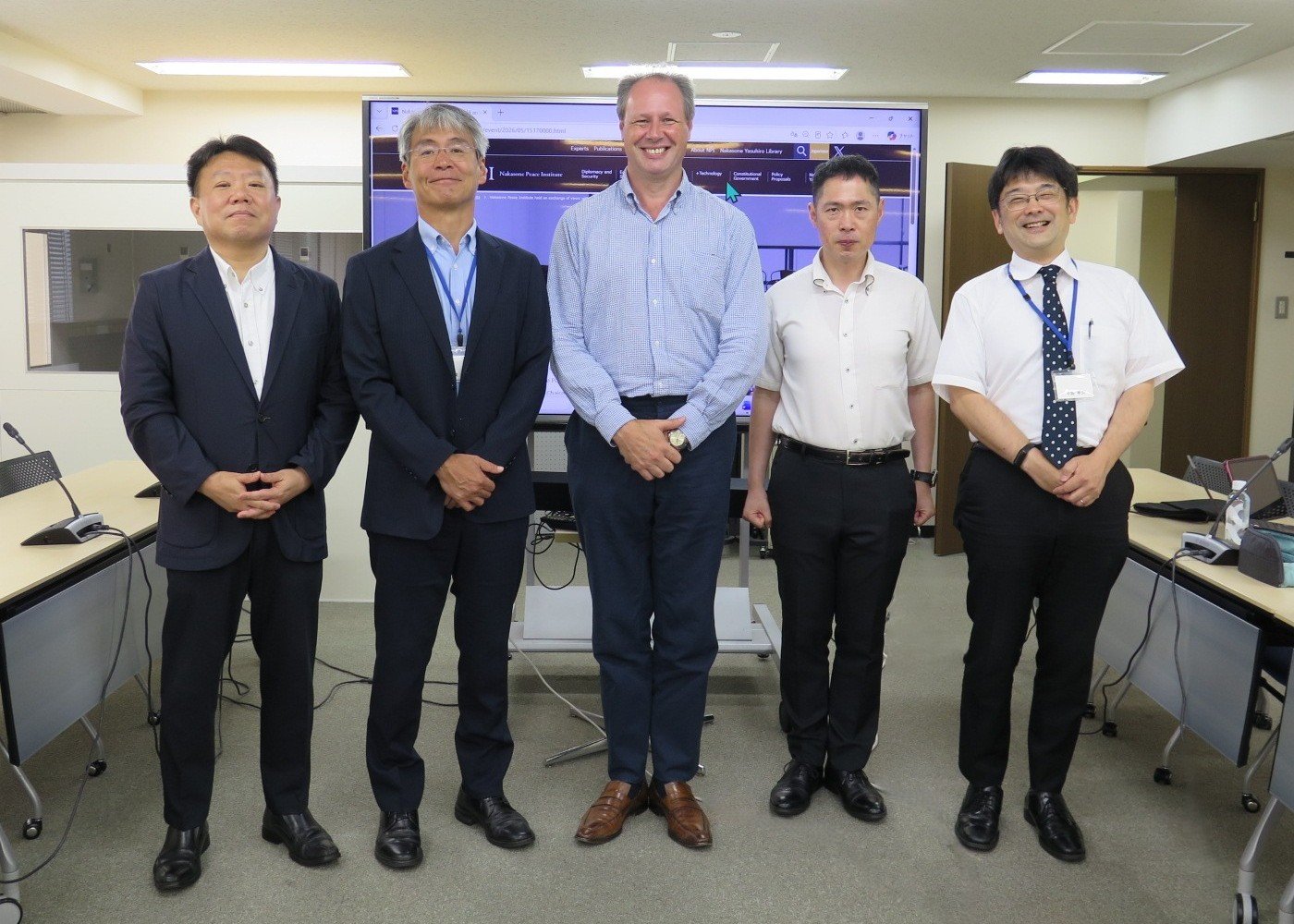
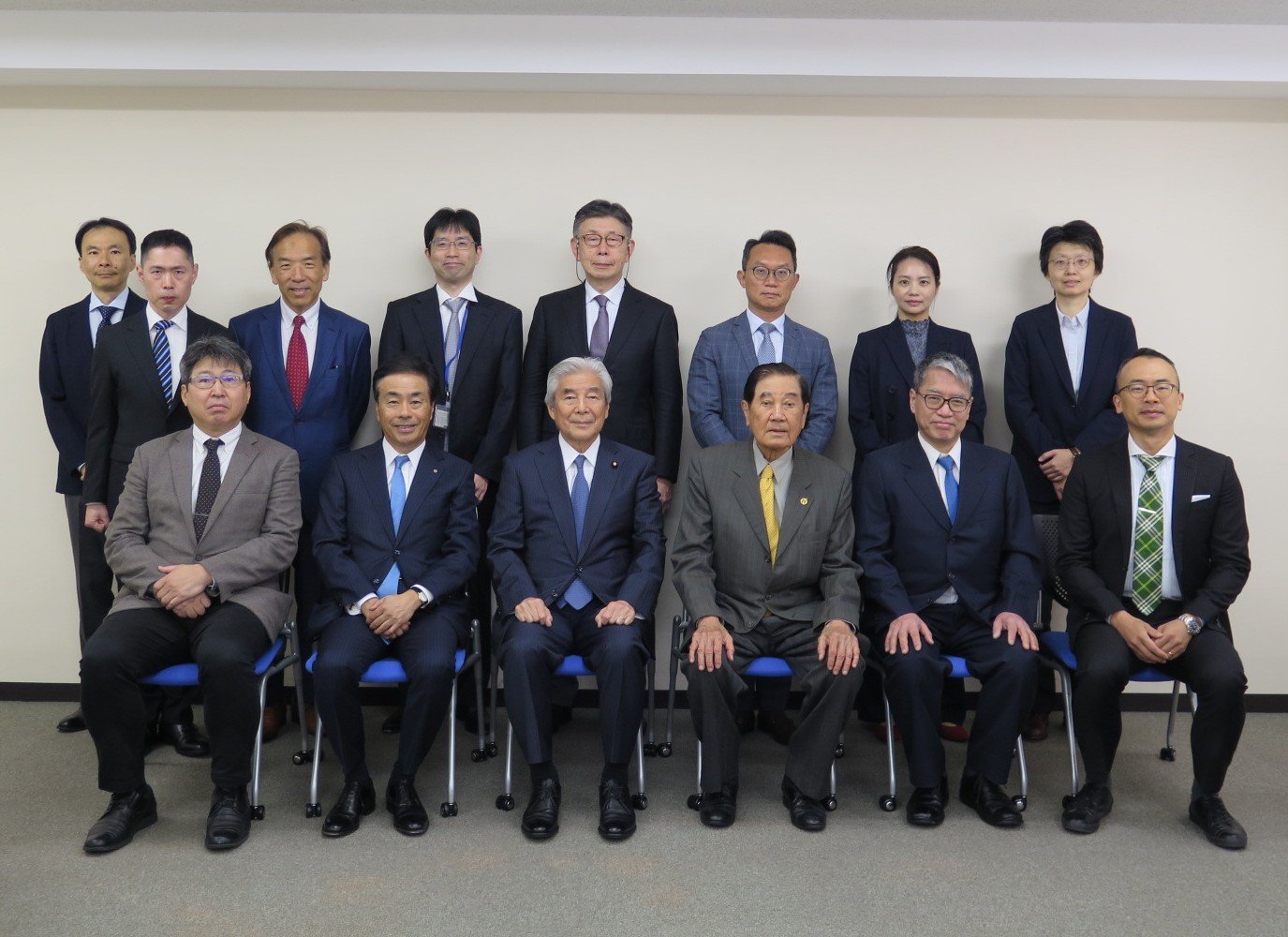
On February 6, 2026, Nakasone Peace Institute hosted an Open Symposium entitled "The World in 2026─The Future of International Politics in an Era Without Coordinate Axes, Compasses, or Nautical Charts" (in person) from 16:30 to 18:00 at International House of Japan in Tokyo.
Moderator
Panelists
Overview
The moderator began by noting that over the past three years, Nakasone Peace Institute has conducted a research project entitled "An Intrinsic Examination of International Issues in East Asia" with the support from the Ministry of Foreign Affairs of Japan. The international situation is currently in a period of major transition, characterized by a complex environment in which various players are intertwined, and a kind of multivariable equation should be addressed. The moderator expressed the hope that today's discussion would provide "guiding lines" for viewing the international situation and asked the panelists to explain their perspectives from their respective fields of expertise.
The panelists responded with the following remarks.
The United States
- While the approval ratings of the Trump administration continue to fall driven by inflation, the Epstein files, and backlash against Immigration and Customs Enforcement (ICE) crackdowns, some observers predict that President Trump's actions on the international stage could become dramatic.
- Europe's growing distrust of the United States could lead to a softening of its stance toward China. The United States, for its part, may pursue large-scale business deals during President Trump's visit to China, potentially creating a "G2-like" atmosphere. Further, the longer the Russia-Ukraine war becomes protracted, Russia's dependence on China is likely to deepen further. A case in which Europe, the United States, and Russia all move closer to China could potentially embolden China to increase pressure on Japan, the Philippines, and Taiwan.
- Furthermore, although Taiwan is not indicated explicitly in the U.S. National Defense Strategy, a defensive line has been drawn explicitly along the First Island Chain. While the administration and American experts generally believe that the defense of Taiwan is directly linked to U.S. national interests, President Trump appears to place greater emphasis on economic relations.
Multilateral diplomacy
- In his book The International Order, Kyoto University Professor Kosaka Masataka once explained international politics as consisting of three systems: a system of power, a system of interests, and a system of values. Canadian Prime Minister Mark Carney, whose speech at the World Economic Forum (WEF) generated much discussion, appears to be approaching China by acting based on interests, undermining the system of values. However, in terms of the system of power, he continues to rely on the strategic balance in U.S.-China relations and on U.S. extended deterrence. Is it possible to conduct foreign policy in a comprehensive manner without undermining all three systems? In the case of Venezuela, Japan has maintained multilateralism while refraining from explicitly criticizing the United States. Perhaps this could be the wiser course.
- The international order based on the rule of law is faltering and at risk of being fundamentally dismantled, giving way to a world governed by the "law of the jungle." In such an environment, survival requires cooperation among middle powers that cannot rely solely on power.
Russia
- The fact that "change to the status quo by force" is no longer viewed as a phenomenon unique to Russia works to Russia's advantage. The war in Ukraine remains in the preliminary stages of full-fledged peace negotiations, and Russia appears to be biding its time. The manner in which the war ends will be critical: the key challenge is whether a peace agreement that is capable of deterring a recurrence of war can be achieved.
- In addition, Russia is employing hybrid warfare to exert influence in Europe and elsewhere, seeking to undermine democracy and generate fatigue over support for Ukraine. The means used for this purpose are also escalating.
- For Russia, a declining great power, a multipolar world is the most desirable outcome. While rapprochement with China is conducive to that objective, Russia does not view it as desirable for China alone to remain in the spotlight.
The Republic of Korea (ROK) and the Democratic People's Republic of Korea (DPRK)
- ROK President Lee Jae Myung's pragmatic diplomacy is expected to continue. Interest in Canadian Prime Minister Mark Carney's Davos speech is not as high in ROK as it is in Japan.
- In U.S.-ROK relations, negotiations concerning tariffs and investment have been concluded. Under the banner of "modernizing" the alliance, Seoul is likely to pursue its interests in areas such as the acquisition of nuclear-powered submarines, revision of the U.S.-Republic of Korea (R.O.K.) Agreement for Peaceful Nuclear Cooperation, and the return of wartime operational control.
- Following the great success of the Japan-ROK summit meeting in Nara, Japan, Prime Minister Takaichi Sanae has gained high popularity in the Republic of Korea. The key challenge going forward will be to deliver tangible results that can be recognized by citizens of both countries. In the ROK, there is strong interest in cooperating with Japan in the economic and industrial spheres, as well as in the area of economic security.
- Relations with China will also be guided by pragmatic diplomacy. Although the Lee administration is progressive, anti-China sentiment within ROK remains strong, making it difficult to approach China in the same way as did former Presidents Park Geun-hye or Moon Jae-in.
The DPRK is expected to convene its Ninth Party Congress in the near future, and close attention should be paid to the policy directions it will set out in both domestic and foreign affairs. Chairman Kim Jong Un has been highlighting the achievements of the past five years in the lead-up to the congress. - Observing the situation in Venezuela, DPRK Chairman Kim likely believes that China and Russia are ultimately unreliable, and that the policy of strengthening strategic autonomy was correct. The United States' diminished focus on the DPRK under a "Don-roe Doctrine" approach may in fact be desirable, and Pyongyang is likely to continue reinforcing its nuclear and missile capabilities.
China
- China considers a multipolar world to be desirable. At the same time, however, Chinese President Xi Jinping has stated that by 2049 China should "advance towards the center of the world stage."
- The year 2035 marks a midpoint toward that goal, and it is generally assumed that Xi intends to remain in office through 2032 to serve a fourth term. It is about time for potential successors to emerge, and in the lead-up to the 2027 Party Congress there are signs of growing domestic political maneuvering over this possibility.
- In terms of Kosaka Masataka's framework of power, interests, and values, it is currently difficult for China to push forward a values-based agenda. Instead, China is seeking to present itself as a provider of benefits, leveraging interests and attempting to translate them into power. It is trying to gain trust from the international community by comparing itself with the United States.
- China aims to increase other countries' economic dependence on itself. It is possible that China is modeling its economy after Taiwan which places a strong emphasis on science and technology and continues to grow economically despite population decline.
- The foundation of China's foreign relations remains its relationship with the United States. Russia is seen as the most reliable partner in challenging the United States.
- At present, Taiwan possesses stronger air defense capabilities than Venezuela, and the United States remains militarily stronger than China. Under these conditions, China cannot take the same course of action against Taiwan that the United States has taken elsewhere. If President Xi Jinping were to conclude that the people of Taiwan have no interest in "forcible" unification by China and judges that no tangible progress has been made, what course of action might he take next? The question now is how to interpret the signs of change that lie ahead. There is a theory of a "2027 crisis," a politically sensitive year due to the Party Congress.
- Chinese aircraft carriers are operating continuously between the First and Second Island Chains. Radar illumination incidents targeting Japan Air Self-Defense Force aircraft have occurred in areas east of Okinawa and near Taiwan.
Next, the following discussion took place regarding economic security.
- Although it is advantageous for allies to unite in addressing China, the United States' stance on export controls toward China is wavering. Under these circumstances, calls by Washington for coordination among allies are unlikely to be effective.
- Artificial intelligence (AI) represents the third major revolution in military technology, following the emergence of the dreadnought battleship and nuclear weapons.
- The ROK has appointed a secretary for AI within the presidential office in an effort to remain competitive internationally. It is also seeking cooperation with Japan in areas such as the joint procurement of critical minerals and energy, as well as in industrial technology. A key question is how Japan would respond should ROK formally apply to join the Comprehensive and Progressive Agreement for Trans-Pacific Partnership (CPTPP).
- Compared to Russia, Ukraine is ahead in certain aspects of modern military technology, including drones. Russia has acquired drone technology from Iran. As large numbers of young people leave the country, economic growth declines, and prospects remain uncertain. If sanctions are not lifted, Russia's dependence on China will further increase.
Further discussion addressed the situation in the Indo-Pacific.
- Even under a "Don-roe Doctrine," there is a recognition in the United States that Indo-Pacific prosperity is closely linked to American interests. It is therefore expected that the United States would continue to be involved in the region as based on its notion of focused U.S. national interest.
- As China strengthens its military capabilities, including its nuclear forces, it would be extremely difficult for a U.S. president to make a decision to intervene in an armed conflict if deterrence were to fail.
- The ROK is strongly committed to playing a role in the security on the Korean Peninsula but remains reluctant about involvement in the Taiwan issue. U.S. Under Secretary of Defense Elbridge Colby argues that allies should contribute more to maintaining the balance of power with China. The ROK, however, views itself as a model ally fulfilling that role primarily on the Korean Peninsula.
- European and Japanese security are interconnected. Geographical divisions are meaningless, especially in the domain of cyber defense. Joint development of a next-generation fighter aircraft by Japan, the United Kingdom, and Italy is also moving forward.
- Russia is strengthening its coordination with China, and Russia's relations with the DPRK have advanced significantly. The DPRK has gained practical experience in modern warfare, including drone warfare. In an effort to project an image of not being isolated, Russia is working to expand and strengthen frameworks such as BRICS and the Shanghai cooperation organisation, expanding military cooperation with countries in the Global South including Southeast Asia, and pursuing nuclear power plant diplomacy.
In response to questions from the floor, the panelists offered the following remarks by way of conclusion:
- Over the three-year research period, the international situation has changed drastically. Today's global environment resembles a "law of the jungle" and constitutes a kind of multivariable equation, with solutions that vary case by case; this means that maintaining relationships with multiple countries is essential.
- For Japan, this creates a difficult situation: it must maintain the Japan-U.S. alliance while simultaneously promoting cooperation among middle powers and building international cooperation across different sectors and domains.
- Even under a "Don-roe Doctrine," it is still recognized in in the United States that Indo-Pacific prosperity is linked to American interests, and Washington is expected to remain engaged as an exception to its unilateralism. To ensure this continuing involvement, however, Japan, Taiwan, and the Philippines must each express how they represent attractive and vital interests for the United States.
- Cooperation among middle powers is indispensable. The CPTPP reflects Japan's values, and it is important for Japan to take the initiative within it. Furthermore, the Japan-EU EPA would not have been achieved without the Trump administration, and the present moment also offers an opportunity to advance Japan-ROK cooperation.
- A formal Japan-ROK alliance is unrealistic, but institutionalizing security cooperation between Japan and ROK should be pursued. While concluding a Reciprocal Access Agreement (RAA) or a defense equipment transfer agreement may be difficult, continued positive relations could make an Acquisition and Cross-Servicing Agreement (ACSA) feasible.
- If ROK applies to join the CPTPP, Japan should take the initiative in facilitating its own early accession.
- Values-based diplomacy remains important, and trust in Japan's commitment to such diplomacy must not be undermined. In many European countries, fatigue over support for Ukraine has become an election issue; however, in Japan it has not, and assistance has continued steadily. This consistency serves as evidence of Japan's trustworthiness.
- Japan remains relatively weak in countering hybrid warfare and should strengthen its resilience by learning from European experience.
- China is increasingly promoting narratives centered on itself. Japan should respond by advancing counter-narratives. The distinction between the "One China Principle" and the "One China Policy" is not self-evident and requires explanation; at present, China's claims are steadily gaining traction in developing countries.
- If deterrence regarding Taiwan were to fail, the U.S. response would depend on the decision of the president at that time, and it is impossible to predict what that decision would be, and there are concerns. Defensive denial is both a strategy aimed at not losing and, at the same time it is also a strategy that cannot decisively achieve victory, raising the possibility of a protracted conflict. Whether to intervene in a conflict with a high risk of protraction would pose a difficult decision for any political leader.
- As long as the United States maintains a strategy based on extended nuclear deterrence, it will maintain a policy of exclusive U.S. nuclear-use authority and is unlikely to tolerate any independent nuclear armament by its allies. If an ally were to be pushed entirely outside the U.S. defense perimeter, that policy might change. In any case, allies would still face severe challenges.