

2026/03/25
March 12, 2026 NPI Open Webinar: "China's Entity List Designation of Japanese Corporations as a Security Policy: The Narrative of Japan's 'Neo-Militarism'"

How should we interpret the Chinese government's decision to place Japanese corporations on its Entity List? Some views suggest that it is reasonable to regard this action as "economic coercion" based on the logic of trade friction. However, the series of measures may also indicate that China already recognizes trade with Japan as a security issue. China's decision to list Japan could therefore be understood as the application of the security exception permitted under the World Trade Organization (WTO) system.
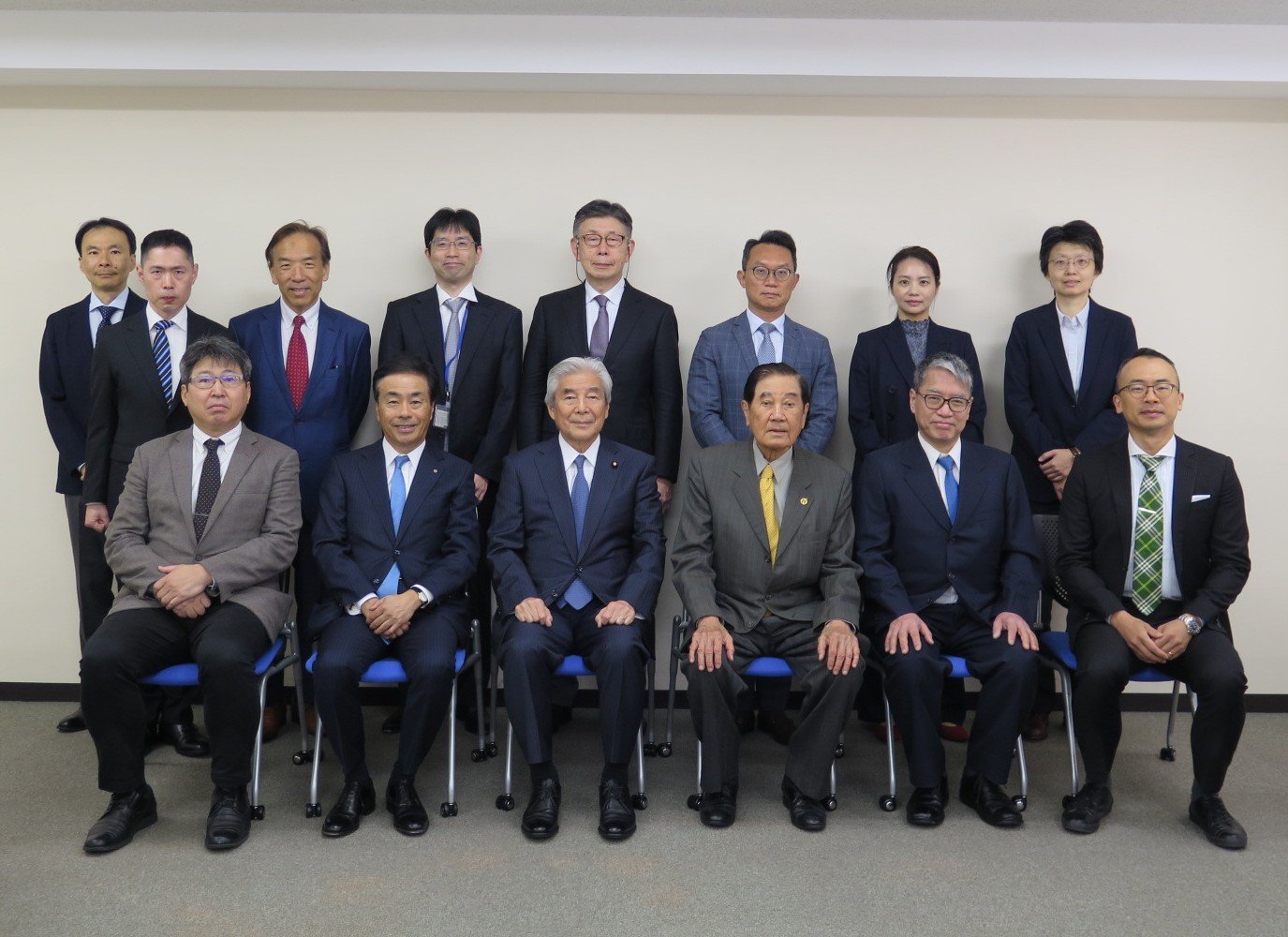
In this webinar, we discussed how to interpret the Chinese government's listing of Japanese corporations on its Entity List and what kinds of responses may be possible, taking into account China's current perception of Japan, which is often represented by the term "neo-militarism."
Speakers
- Kawashima Shin, Executive Director of Research, NPI
- Watanabe Mariko, Professor, Faculty of Economics, Gakushuin University
On the day of the event, the webinar was attended online by participants from government ministries and agencies, corporations, researchers, and the mass media, and a lively discussion took place. The main points of the discussions are as follows.
- Based on its national goal of catching up with the United States by 2049, with 2035 as a midpoint, China has been taking actions such as attempting to weaken ties between the United States and its allies and criticizing advanced countries while presenting itself as a representative of developing nations. Year 2026 is a season of personnel changes in which the selection of President Xi Jinping's successor is coming into view, which has heightened tensions.
- China claims that the Treaty of San Francisco is invalid, that the status of Okinawa remains undetermined, and even argues that Japan's possession of the right of collective self-defense itself constitutes a challenge to the postwar order. Furthermore, the term "neo-militarism," used by Yang Bojiang in a Guangming Daily article in November 2025, was subsequently authorized in a People's Daily article in January 2026; since then it has been used in statements by government institutions. China's actions have also intensified in parallel with this rhetoric--from increased Chinese activity around the Senkaku Islands and the ban on seafood imports from Japan to aircraft carrier operations beyond the first island chain, and the listing of Japanese corporations on the Entity List.
- As the Chinese government has intensified its rhetoric, public sentiment toward Japan in China has deteriorated rapidly since around the end of the COVID-19 pandemic. At the same time, perceptions of the importance of Japan-China relations have become asymmetric between the two countries. In the online space as well, during Japan's House of Representatives election there were signs of China's infiltration operations linking the idea of the "Takaichi administration" with the notion of "war."
- China's pressure on Japan has risen to a level with almost no precedent. The targets of criticism include constitutional revision, historical issues (such as the Yasukuni Shrine issue), and the revision of Japan's Three Security Documents, but for China the core issue is Taiwan. Although events such as APEC China 2026 in November 2026 are scheduled, there is currently no clear path toward the "normalization" of relations. For the time being, attention is focused on the U.S.-China summit meetings expected to take place multiple times in 2026. Japan should present counterarguments to China based on China's policies and the actual situation and convey the message that further pressure will create difficulties for China as well.
- Under international trade rules, political and economic logic should be separated. The WTO, Regional Comprehensive Economic Partnership (RCEP), and Comprehensive and Progressive Agreement for Trans-Pacific Partnership (CPTPP) are all premised on the principle of most-favored-nation (MFN) treatment, with national security exception clauses built in. China has thus far claimed to uphold free trade; however, measures such as restrictions on rare earth exports to Japan, reductions in passenger flights, and regulations on the sale of entertainment content after Prime Minister Takaichi's remarks in November 2025 can be considered violations of MFN treatment.
- Countries such as Australia, Lithuania, Viet Nam, and India, which have previously faced discriminatory treatment from China, have brought cases to the WTO. Although the Appellate Body has been rendered nonfunctional due to actions by the United States, dispute settlement has been pursued through the Multi-Party Interim Appeal Arbitration Arrangement (MPIA), which was established as an alternative mechanism.
- Since Russia's invasion of Ukraine, the number of cases involving the national security exception has increased. Broadly speaking, the emerging view is that the use of the security exception may be justified when there is a conflict at a level recognized by UN resolutions. However, Japan and China are not in a state of war, and it is highly unlikely that the Takaichi remarks would meet the threshold for invoking the security exception. However, measures that appear to clearly violate MFN treatment--and could be regarded as economic coercion--have been employed by China. It seems that there has been hesitation on the part of China to characterize the above-mentioned targets of criticism as a military threat.
- As part of its legal infrastructure to invoke the security exception in a manner consistent with WTO rules, China has developed legal frameworks with extraterritorial application when it applied to join the CPTPP around 2021. U.S. and Taiwanese corporations have been listed under China's regulations on export control of dual-use items since 2025, and on this occasion the regulations were applied to Japanese corporations for the first time. The "watch list" was also used for the first time in relation to Japanese corporations in this instance.
- It is possible that China has thus far deliberately employed economic coercion--even at the cost of rule violations--because it sought to limit its adversarial posture to the United States in military competition and did not wish to construct a confrontational relationship with Japan or the EU. The fact that the security exception has been invoked in this case may indicate a shift in China's approach toward Japan. After revising its Three Security Documents and beginning discussions on arms exports, Japan may now be grouped together with the United States as a military threat (although negotiations would still be conducted only with the United States).